Short answer
Good warehouse housekeeping keeps walkways clear, break rooms and restrooms clean and restocked, and dust under control. OSHA's walking-working surfaces standard requires workplaces to be kept clean, orderly and sanitary. Split duties in writing: your team handles workstation housekeeping and spills; the cleaner handles break rooms, restrooms, offices and agreed floor areas.
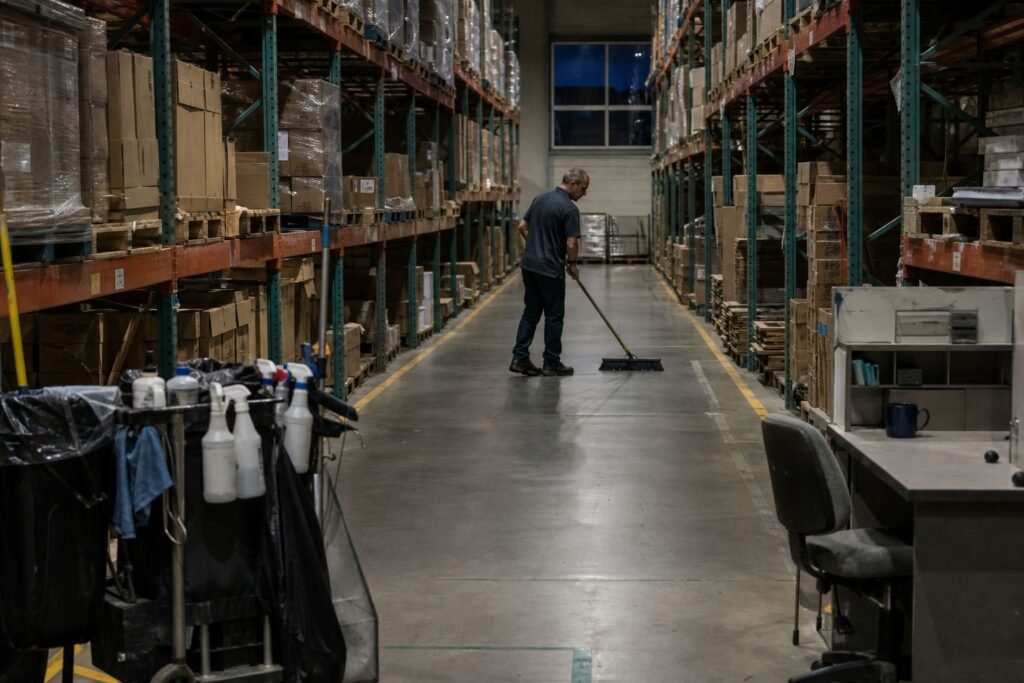
Why housekeeping matters in a facility
OSHA’s walking-working surfaces standard requires workplaces to be kept clean, orderly and sanitary, with floors kept free of hazards such as spills and debris where practical. Beyond compliance, clean facilities are simply easier to work in: fewer slips, fewer lost items and a better place for people to spend a shift. (This guide is general information, not legal advice. Your safety team owns your compliance program.)
Split the work clearly
| Area | Usually your team | Usually the cleaner |
|---|---|---|
| Production and storage areas | Daily housekeeping at workstations, spill response | Agreed floor areas and walkways, if in scope |
| Break rooms and lunch areas | Basic tidying during shifts | Full clean and sanitize |
| Restrooms and locker rooms | Reporting problems | Clean, disinfect, refill |
| Offices | – | Full office checklist |
The exact split varies. What matters is that it’s written down so nothing falls between the two.
A practical routine
Every shift or every day
- Clear walkways and marked aisles.
- Empty bins at workstations and break areas.
- Reset restrooms in high-traffic facilities.
Every cleaning visit
- Break rooms cleaned and sanitized.
- Restrooms and locker rooms cleaned, disinfected and restocked.
- Offices cleaned.
- Agreed floor areas swept and mopped.
Periodic
- High dusting where safely reachable.
- Sills, ledges and vents.
- Deep clean of restrooms and break rooms.
How we clean facilities
OSHA-trained crews, scope agreed in writing at the walkthrough, schedules tied to your shifts, and the same crew every visit.